It is a familiar scene in almost every office: a well-meaning employee or rushed facility cleaner sprays a shared conference room table and immediately wipes it dry with a paper towel. The room smells like citrus, the coffee rings are gone, and the surface looks pristine. But microscopically, the area is still a hot zone.
During cold and flu season, a surface that merely looks clean isn’t necessarily disinfected. The widespread habit of wiping down surfaces too quickly cuts a critical chemical process short, leaving pathogens alive and ready to infect the next person who touches the desk. The missing link in workplace illness prevention isn’t a stronger chemical, it is understanding and enforcing dwell time.
What Is Dwell Time (And Why Does It Matter)?
Dwell time, frequently listed on product labels as “contact time,” is the exact amount of time a disinfectant must remain visibly wet on a surface to effectively kill the pathogens listed on its label.
Disinfection is a chemical reaction, not an instantaneous physical wipe-away. Active ingredients need time to penetrate and break down a virus’s protective outer layer, such as the lipid envelope of influenza viruses or the highly resilient protein shell of rhinoviruses. When a surface is wiped completely dry just seconds after spraying, the disinfectant is physically removed before it can neutralize the threat. Worse, dragging a damp cloth across a newly sprayed surface can actually spread surviving viral particles to previously uncontaminated areas of the workspace.
Cold & Flu Viruses in the Office: How Long Do They Survive?
When an infected employee sneezes, coughs, or simply touches their face before grabbing the breakroom door handle, they leave behind viruses that are remarkably resilient on hard, non-porous surfaces like desks, glass partitions, and stainless steel.
- Influenza (Flu A & B): Can remain infectious on hard surfaces for 24 to 48 hours.
- RSV (Respiratory Syncytial Virus): Typically survives for several hours on countertops and keyboards.
- Rhinovirus (The Common Cold): Exceptionally hardy, capable of surviving anywhere from several hours to multiple days depending on the indoor climate.
In a busy commercial environment, the highest transmission risks are clustered in high-touch hotspots. These include elevator buttons, communal printer touchscreens, breakroom refrigerator handles, shared keyboards, and conference room chairs.
Cleaning vs. Sanitizing vs. Disinfecting
Office managers and facility teams frequently use these terms interchangeably, but they represent entirely different levels of infection control. Building a healthy workplace requires understanding when to deploy which method.
| Action | What It Does | Target Threat Level |
| Cleaning | Physically removes dirt, grease, crumbs, and some germs using detergents and water. It does not kill pathogens, but it lowers their numbers. | Low (Everyday dust, coffee spills, general office upkeep) |
| Sanitizing | Lowers the number of bacteria on a surface to a safe level as judged by public health standards. Typically targets bacteria, not viruses. | Medium (Food prep areas in office kitchens) |
| Disinfecting | Uses registered chemicals to actively destroy specific viruses and bacteria on hard surfaces—provided full dwell time is reached. | High (Cold/flu outbreaks, high-touch communal points) |
The Pre-Cleaning Rule: Disinfectants cannot penetrate heavy organic matter. If a breakroom table is covered in lunch crumbs and sticky residue, that grime acts as a physical shield for the viruses beneath it. Facility staff must first pre-clean the area to remove the physical barriers before applying a disinfectant. Stocking your janitorial closets with high-quality industrial cleaning supplies ensures your team has the right degreasers and detergents to clear this bio-burden effectively before the disinfection stage begins.
How Long Do You Actually Need to Wait?
Contact times are not universal; they vary wildly depending on the active ingredients and formulations found in your industrial cleaning supplies. Depending on the product, dwell times can range from 30 seconds to 10 minutes.
- Accelerated Hydrogen Peroxide: Often requires 1 to 5 minutes of wet contact time.
- Alcohol-Based Wipes/Sprays: Usually require 30 seconds to 3 minutes, though alcohol evaporates rapidly.
- Quaternary Ammonium (“Quats”): The standard in many commercial facilities, frequently requiring 3 to 10 minutes to reach maximum efficacy.
- Diluted Bleach Solutions: Typically need 1 to 5 minutes of dwell time.
Facility managers must train their teams to read the back panel of every chemical bottle. Furthermore, the dry air pumped out by commercial HVAC systems during the winter can cause surfaces to evaporate faster than the required dwell time. If a desk dries in two minutes but the product requires a five-minute contact time, staff must reapply the spray to keep the surface visibly wet for the entire window.
4 Simple Habits for Effective Facility Disinfection
Upgrading your protocols doesn’t necessarily mean adding hours to the cleaning shift; it just requires a change in sequencing.
- Clean First, Disinfect Second: Wipe away visible smudges, dirt, or spills before reaching for the heavy-duty disinfectants.
- Apply Enough Product: Mist or wipe surfaces generously. A light, misty pass that evaporates instantly is useless against the flu virus. The surface must look glistening wet.
- “Spray and Walk Away”: Build dwell time into the natural workflow. Train cleaning crews to spray high-touch surfaces in a room first, then empty the trash bins, vacuum the carpet, or restock paper towels while the chemistry does the work. Once the other tasks are done, they can return to wipe away any remaining chemical residue.
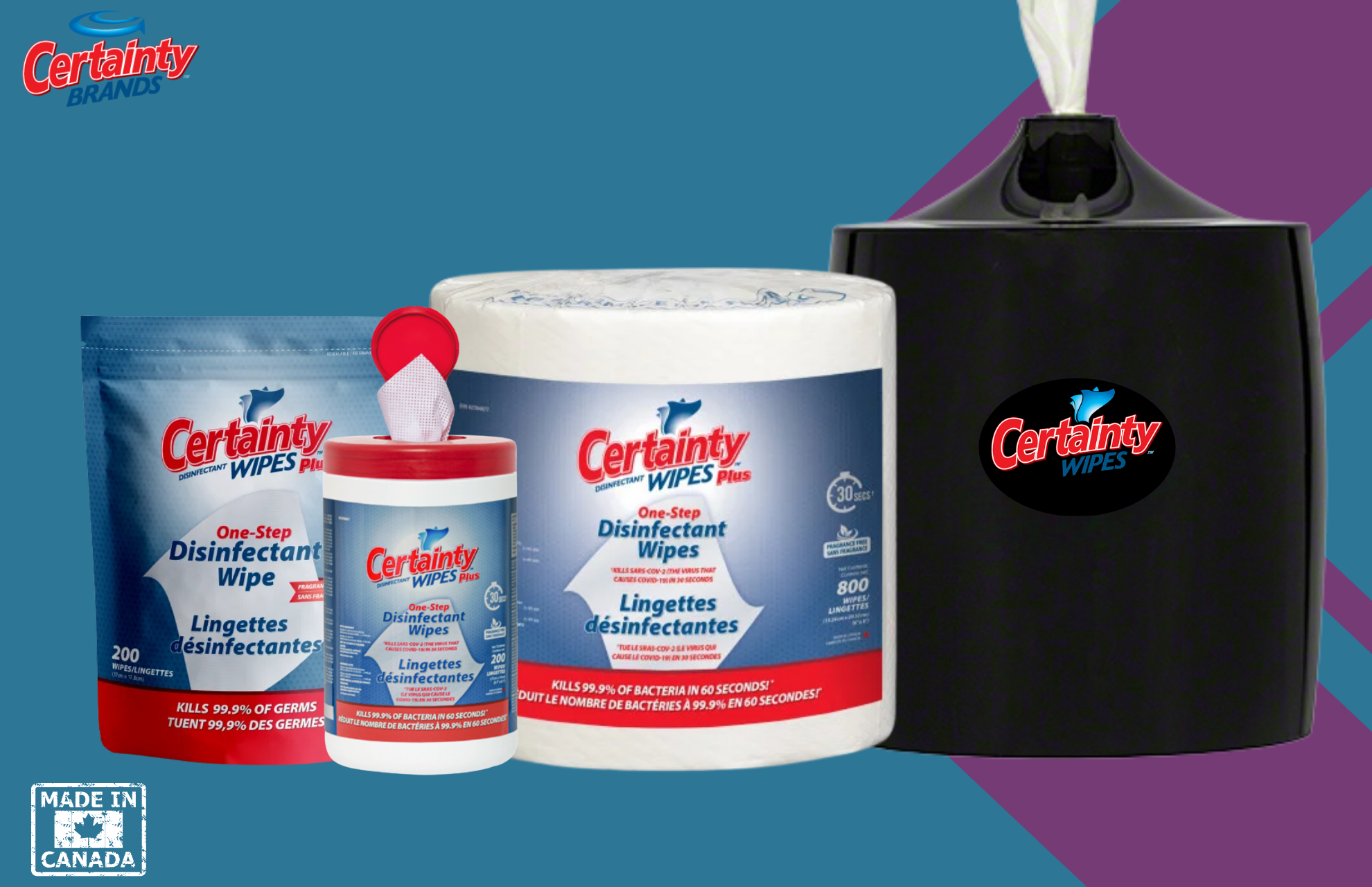
- Protect the Tech: Spraying liquid directly onto communal keyboards and touchscreens is a recipe for IT disasters. Rely on approved, heavy-duty disinfecting wipes for electronics, ensuring staff use enough wipes to keep the hardware visibly wet for the label’s stated contact time.
Combating workplace absenteeism during peak cold and flu season requires a proactive approach. It is not just about procuring the strongest industrial cleaning supplies on the market; it is about ensuring the people using them understand the science of how they work. By shifting your facility’s culture from “spray and wipe” to “spray and wait,” you give those chemicals the necessary time to neutralize viruses, breaking the chain of transmission and keeping your workforce healthy.
At CleanSource, we are your one-stop shop for all your industrial cleaning needs. We offer a wide range of disinfectants available as wipes, liquid or aerosol.
Plus, with our Canada-wide shipping, we can get the cleaning power you need right to your doorstep, no matter where you’re located.
Visit our online catalogue to browse our extensive selection of industrial cleaning supplies.